.LocalTrailer-8c267364ae9cbb8ce68c7f7ae13b1c9c83b3c8b62ad701eabb6305173d5fc28e.png)
Towing Tips
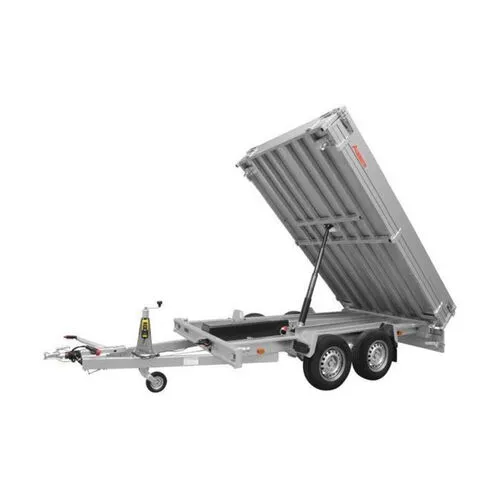
Hook up right. Tow with confidence.
New to towing, or just want a refresher? Safe towing comes down to three stages: hooking up correctly, double-checking everything, and driving with the trailer in mind. Here's how to get each one right.
.overviewhookup-c9deb3f1d2c31d8326997683e99ea4854de7605fe43f90ffd908f49d8be138d6.png)
Connect the coupler, cross the safety chains, and plug in the lights. Nine quick steps, in order.
.overviewcheck-b847943af54fdacd4bffa4d028f3734b9e0747a099fac80e64e5eb4eed2d844f.png)
Run through a quick checklist before you pull out. It catches the small misses that cause big problems.
.overviewdrive-5d935f81080c8d50e1b717898ee0d40d6cd93b800713ba3828d6812cf1f9c0f1.png)
Load it right, leave extra room, and brake early. A trailer changes the way your vehicle handles.
Hooking up your trailer
Work through these three stages in order. A friend guiding you while you back up makes it easier, but you can absolutely do it on your own (see the tips below).
Connect the coupler
- Line up your vehicle with the trailer. A friend guiding you from outside helps a lot.
- Crank the jack to raise the coupler above your hitch ball.
- Slowly back up until the ball is directly under the coupler.
- Lower the coupler all the way onto the ball, not just resting on top.
- Close the latch and lock it with the safety pin or lock.
.hookupcoupler-f993574297da2a77242a7144b24b4a0a7900d5f874163cc9c226216d4201dd4a.png)
Attach the chains and raise the jack
- Cross the safety chains under the coupler in an X, then hook them to your vehicle. If the coupler ever comes loose, the X cradles the tongue and keeps it off the road.
- Crank the trailer jack all the way up so it clears the road.
.hookupchains-9dcbd6440cd75bdb8db0a16f10d1897ced6be0944e570d4fc2a7a3bfc3218706.png)
Plug in and test the lights
- Push the trailer wiring plug firmly into your vehicle socket.
- Have someone stand behind the trailer while you check the running lights, brake lights, and both turn signals.
.hookuplights-c9b8d53f0dcf6261061a0da8834ebc96229caec919aa648695872cff93522857.png)
Four tricks for a solo hookup
No spotter? These make it much easier to line up the ball and coupler on the first try.
.soloslow-3a7fa63369b1eb98a4768407d78abd0bae94f76c55b6950e4acaf5d7f7098971.png)
Going slow is good advice any time you hitch up, helper or not. Take your time and don't be afraid to redo a step.
.solopush-5d91a921763f319d5e5ab96763e4642d79994f08d1d27b7ca88d1ec805afc0ee.png)
If the trailer is light enough, push or pull it to your vehicle instead of backing the vehicle up to it. Don't strain yourself; with a heavier trailer this may not be an option.
.solodoor-cd1d5cdce92771b284606f93513ef891ade42d75764f4c85d5e09c9007aa2bec.png)
With a foot or two left between your vehicle and the coupler, open your door and pick a spot on the ground as a reference point to judge the remaining distance. Keep the coupler raised above the ball to avoid damage.
.solocamera-9cf8c1cd744bf5e9ec823906af392321b278080a3dd963a543ef46e6673a507f.png)
A backup camera makes it much easier to see the coupler as you back up. No camera? Attach a brightly colored stick or flag to the coupler, pointed straight up, so you can see your target through the back window.
Run through the hookup checklist
- Does the trailer ball match the coupler size?
- Is the trailer ball properly torqued on the ball mount?
- Is the ball mount secured in the receiver tube with a hitch pin or lock?
- Is the ball fully engaged in the coupler, not just sitting on top?
- Is the coupler latch locked and secured with a safety pin or lock?
- Is the trailer jack fully retracted?
- Is the wiring plug firmly inserted in the vehicle socket?
- Are the safety chains hooked up and crisscrossed under the coupler?
- Are the running lights, brake lights, and turn signals working on both the vehicle and trailer?
.checklist-d97dadeb2b5504c93da4c7b9933f87cd46cf9a60988228115d538d9c9799b6fa.png)
Towing tips for a safe trip
A trailer changes the way your vehicle handles. Keep these habits in mind from the moment you pull out.
Set up your load before you leave
- Make sure your vehicle and hitch are rated for the combined weight of the trailer and your cargo.
- Put about 60% of the weight on the front half of the trailer. That gives you enough tongue weight for a smooth, safe ride.
- Tie down and secure everything. Re-check the load after the first 5 miles, and periodically during your trip.
.roadload-b06935ab5326eb638f01ace96e84892946550d644ec6eb00f3fee5d7fdf9d8e1.png)
Give yourself extra time and space
- Look farther ahead than usual and increase your following distance. Stopping, accelerating, turning, and changing lanes all take longer with a trailer.
- Avoid sudden acceleration, braking, and maneuvering.
- Your blind spots are bigger. Make sure you have plenty of room before changing lanes or passing, and move over gradually.
- Your brakes are working harder. Anticipate stops and start braking sooner than normal.
.roaddrive-3f9153f7ebbe9607054127612ec96f93760ac649bfd7bf302e833bba09da4dc1.png)
Handle sway and plan your parking
- If the trailer starts to sway, the load may be unevenly distributed (remember: 60% up front).
- Don’t overcorrect or slam on the brakes. Slow down smoothly, pull over, and assess the situation.
- It’s easy to get boxed in with a trailer. Only pull in where there’s room to make a complete turnaround.
- A spot farther away that doesn’t require backing up is often the best choice.
.roadcontrol-a0d14db437b47289d3c24753f3ca9e5eed515c38ad0c095ad5080099be62ab1d.png)
Ready to hit the road?
Have a question about towing, or not sure which trailer is right for your vehicle? We're happy to help.